
China's new energy vehicles enter a golden period of export
A set of continuously rising data also reflects the growing competitiveness of China's new energy vehicle industry in the global market. Data released by the China Association of Automobile Manufacturers shows that in 2023, China's new energy vehicle exports will reach 1.203 million units, a year-on-year increase of 77.6%; in 2024, new energy vehicle exports will reach 1.284 million units, a year-on-year increase of 6.7%.
"China's new energy vehicle industry has grown from nothing to something, from small to large, transforming its first-mover advantage into an industry-leading advantage and driving the global development of intelligent, connected new energy vehicles," said Fu Bingfeng, Executive Vice President and Secretary-General of the China Association of Automobile Manufacturers.
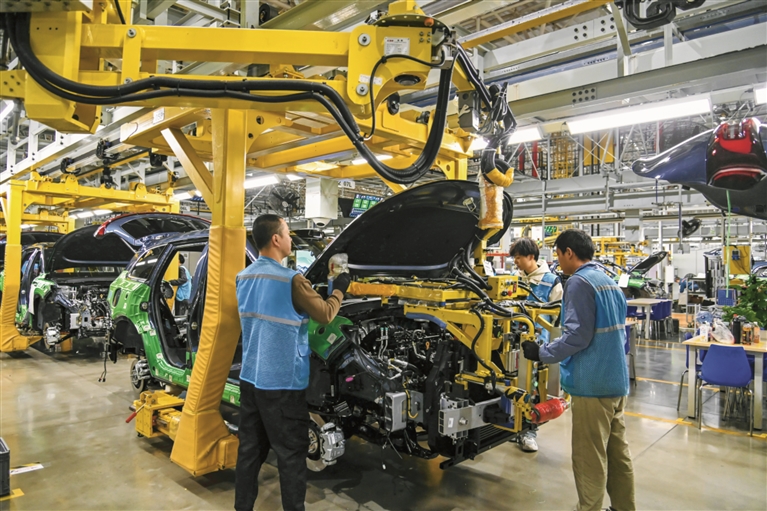
"Exported new energy vehicles must be tailored to the individual needs of consumers in their destinations and undergo targeted improvements. Extensive local adaptation and improvement work is required to ensure high satisfaction."
New energy vehicles are making rapid progress in their overseas expansion. However, the sea presents both beautiful scenery and challenging situations. Different policies and regulations across countries present obstacles to the global expansion of Chinese new energy vehicles. For example, the recent imposition of tariffs on Chinese electric vehicles by the United States and the European Union poses challenges to the export of Chinese new energy vehicles.
However, tariffs aren't the only challenge facing Chinese new energy vehicles going global. With growing global emphasis on environmental protection and sustainable development, low-carbon management has become a core issue for new energy vehicles complying with regulations overseas. For example, the EU's Batteries and Waste Batteries Regulation requires electric vehicle batteries to disclose carbon footprint information, provide battery labels, and provide a "digital passport." This will increase compliance costs for new energy vehicles in the EU market and place higher demands on automakers to enhance their ESG governance during exports.
The issue of recharging in overseas markets cannot be ignored either. According to data released by the International Energy Agency (IEA), the vehicle-to-pile (public charging station) ratios in China, Europe, and the United States in 2023 will be 8.7:1, 16.7:1, and 26.4:1, respectively. This comparison reveals that the recharging systems for new energy vehicles in Europe and the United States are still underdeveloped.
China's new energy vehicle industry is searching for new solutions.
Localizing technology is a deeper level of integration. Tang Zhikun admitted to a reporter from China Industrial News that, due to regulations in different markets within the EU and ASEAN, Xpeng Motors' intelligent driving capabilities have yet to be fully realized overseas. Currently, Xpeng Motors is actively communicating with local governments to promote regulatory liberalization and is conducting extensive testing and road trials in Germany, the Middle East, Hong Kong, and other locations, preparing to quickly establish a leading edge once regulations are relaxed.
Source: China Industrial News Network